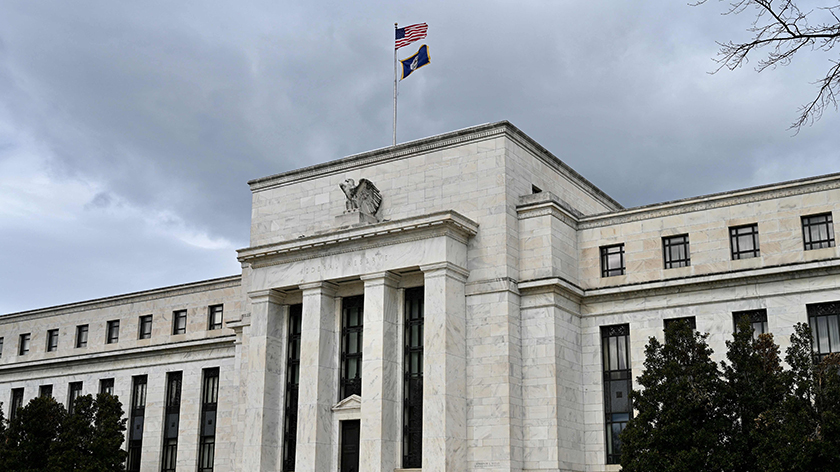
Central bankers are described as the high priests of high finance. That’s because they control high-powered money, commonly known as the monetary base, or the sum of currency in circulation plus commercial bank deposits with them. By buying government bonds from banks or the market (which expands central bank balance sheets), the commercial bank reserves rise, improving market liquidity and therefore tend to reduce short-term interest rates. In effect, central banks affect market sentiment by expanding their balance sheets (technically called quantitative easing), since buying long-term bonds lower their yields, whilst increased liquidity lowers short-term rates, thus changing the entire interest rate curve. When central banks tighten liquidity, interest rates rise, affecting asset prices and impact the real economy through influencing economic growth and jobs. Central banks seek to implement monetary policy to maintain price stability and financial stability, which is today seen as a professional and technical job requiring autonomy of operations, if not policy independence. However, one should never forget that the first central bank was created in Sweden in 1668 to finance the government and operate the bank clearing house. When the currency was pegged against gold (the gold standard), central banks operated a simple rule – no gold, no monetary creation. However, governments quickly found out that central banks can fund huge government deficits at the risk of inflation. Governments with high debt do not like high interest rates, since there comes a point whereby the fiscal debt interest burden becomes unsustainable. Thus, central bankers have the unpleasant task of what 1951-1970 Fed Chairman William McChesney Martin called, “taking away the punchbowl just as the party gets going ”, namely, tell the Minister of Finance what he does not want to hear – the need for fiscal tightening. Inflation typically occurs when governments borrow too much money and force central banks to monetise their debt. After all, inflation erodes the real value of government debt. Argentina inflated away its debt regularly. Debt-distressed governments, mostly developing countries, simply default. The Federal Reserve Bank of Kansas City’s Annual Economic Policy Symposium is where serious central bankers go for their annual pilgrimage, mostly to hear the Federal Reserve Board Chairman pontificate on the latest outlook for US interest rates. This year’s meeting was highly politically charged because United States President Donald Trump has repeatedly called Federal Reserve Chairman Jerome Powell names as well as asking him to resign immediately. Pilling on the pressure last Monday, Trump announced he was firing Lisa Cook, a member of the Fed Open Market Committee. Everyone was waiting to see whether Powell would strongly defend the leading central bank’s independence. In his carefully worded speech last Friday, Powell basically used technical jargon to vaguely hint that there may be room for cuts in September, sending the Dow Jones up to record highs. If the Fed complies with the suggestion two weeks earlier by US Treasury Secretary Scott Bessent to move neutral (net zero real) Fed interest rates to 150 basis points lower, you can […]
3月前

Coming back from an extended conference on gross national happiness in Bhutan, which is one of the first carbon negative countries in the world, I became aware that intergenerational justice may be one of the most important moral questions we face today. The world is drowning in debt. According to the IMF, global debt amounted to US$ 250 trillion in 2023, or 237 percent of GDP, with global private debt at more than US$ 150 trillion or 143 per cent of GDP. If global private wealth is now estimated at over $450 trillion, is debt of $250 trillion seriously a problem? It is, if net wealth is distributed unevenly. Worldwide net private wealth stood at $454.4 trillion in 2022. The highest wealth rung or 1.1% of the world adult population controlled $208.3 trillion in wealth, or 45.8% of the global total. Wealth is not only concentrated – it is concentrating as the rich get richer. So when GDP is rising and markets are hitting record highs, most people are not happy because of perceived income and wealth inequity. Of Course, wealth is passed from generation to generation. But with the gradual dismantling of death duties in many countries, and tax cuts for the rich, such as in America, wealth has been retained in wealthy hands. The UBS Global Wealth Report 2025 forecasted that “a total global wealth transfer of over USD 83 trillion within the next 20 – 25 years. Some USD 9 trillion of this will be horizontal and over USD 74 trillion will be vertical, between generations, i.e. roughly 12%”. In other words, wealth is less distributed widely, but more down to successors and heirs. At the household level, the bottom half of society not only do not have much wealth, but they are also in debt. The IMF, however, is more concerned with the rise in public debt, which is the burden of all citizens, including future generations. After all, the future generations inherit not just assets but also liabilities. The poor are also subject to higher interest rate on their debt due to higher credit risks. Thus, when incomes are insufficient to pay both interest and principal, the poor, including many developing markets, get further into debt distress. Intergenerational justice refers to the ethical principle that present generations should not compromise the well-being or opportunities of future generations. Simply, future generations should have fairness in the distribution of resources, benefits, and burdens over time. When the existing generation is worsening social capital (through great conflicts between class, country and along religious and racial lines) or through damaging natural capital (by cutting down forests, emitting pollution and carbon dioxide), we are leaving social capital and planetary resources in worse shape for our children and grandchildren. There are two types of injustices staring us in the face. The first is human injustices against other people and the other is planetary injustice where we abuse Mother Nature. The baby boomer generation to which I belong, born after the […]
5月前
Since the arrival of the Chinese AI tool DeepSeek in January, this month has seen a flurry of conferences on artificial intelligence (AI). At the AI Action Summit in Paris on February 11, 2025, attended by global leaders like EU President Ursula van Leyden, French President Emmanuel Macron and Indian Prime Minister Modi, US Vice President JD Vance made four major US policy points on AI. First, the Trump Administration “will ensure that American AI technology continues to be the gold standard worldwide, and we are the partner of choice for other foreign countries and certainly businesses as they expand their own use of AI.” Second, “we believe that excessive regulation of the AI sector could kill a transformative industry just as it’s taking off.” Namely, the US wants more AI deregulation. Third, we feel very strongly that AI must remain free from ideological bias, and that American AI will not be co-opted into a tool for authoritarian censorship.” Fourth, the Trump administration will maintain a pro worker growth path for AI.” Trump2.0 does not fear job losses as AI is seen as a tool for job creation. The current daily tornado of Executive Orders and speeches by key American officials on global issues suggest that despite the sound and the fury, the key signal of Trump 2.0 is to transactionally create fortress America, defended by tariff and migration walls, aiming to achieve the gold standards in energy, AI/technology, military power and the dollar. Tariffs on Canada and Mexico, claims on Greenland, and ending the war in Ukraine only prove Henry Kissinger’s dictum, “It may be dangerous to be America’s enemy, but to be America’s friend is fatal.” No country has experienced such a bitter lesson than Ukraine, having lost an unverifiable number of war casualties, huge war debts to NATO countries, with threatened US aid cut-off, unless it cedes rare mineral rights to America. What is happening to the gold standard, since the price of gold has hit just under US$3,000 per ounce in New York, performing better than S&P 500 or the NASDAQ stock indices? Veteran gold analyst Alasdair Macleod has argued that recent events in the New York and London gold markets show that the gold price uptick is less about the speculation on gold as a hedge against systemic risks, but more an issue of the devaluation of the dollar standard against gold. Indeed, the dollar has strengthened against the other reserve currencies as inflation has remained stubbornly higher than the Fed anticipated, so US interest rates are higher than Euro, Japan or Chinese interest rates. Indeed, central banks like China, Russia and smaller countries are beginning to buy gold in serious quantities, worried about possible US sanctions on their financial systems for geopolitical reasons. What the gold standard for money shows is that any benchmark is not absolute and is relative to something else. Thus, the US is benchmarking herself against China in different metrics, such as finance, technology, military power, […]
10月前
更多Andrew Sheng







 登入
登入
 Newsletter
 联络我们
联络我们
 登广告
登广告
 关于我们
关于我们