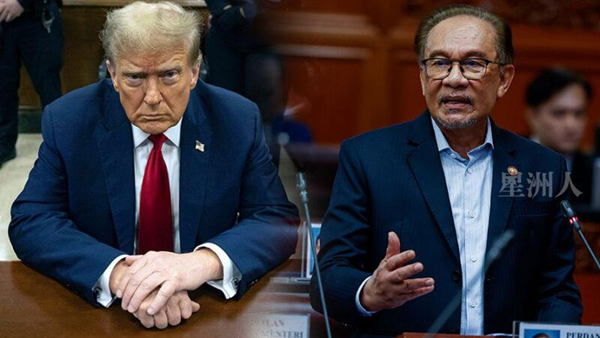
Malaysia does not agree with the United States that the Bumiputera policy is discriminatory, according to Prime Minister Datuk Seri Anwar Ibrahim. Claiming that this is the bottom line, Malaysia stands firm on its existing policies. Hence, the US increases its tariff on Malaysian goods by an additional 1 percent from 24 percent to 25 percent. The 1 percent may seem small but the increase is significant. Do not forget that for Indonesia, the US dropped the tariff from 32 percent to 19 percent, and Vietnam from 46 percent to 20 percent. This means Malaysia will lag behind its neighbors in attracting investments and export competitiveness. Does the “bottom line” by Anwar meet the long-term interest of Malaysia? This is something that the government of Malaysia ought to take into consideration seriously. As it turns out, it’s not just the non-Bumiputeras in Malaysia who are dissatisfied with the Bumiputera policy—even foreign countries (such as the US) are displeased. How exactly the US is unhappy, we don’t know for certain. But it’s well known that since the New Economic Policy (NEP) was launched in 1971, the goal has been to secure 30 percent equity for Bumiputeras. Government projects and contracts are prioritized for Bumiputera contractors; certain sectors are reserved exclusively for Bumiputeras; Bumiputera companies enjoy various incentives and privileges; and top management positions in GLCs are, by unwritten rule, reserved for Bumiputeras. Globally, it’s nearly impossible to find another country with such racially-driven policies. As a result, economic participation opportunities for non-Bumiputeras and foreign investors are effectively blocked, or at least half the door is shut. The Bumiputera policy erects a high wall in the economic realm—non-Bumiputeras cannot easily enter. And if they do, it often requires going around through informal channels, incurring additional costs—something not all non-Bumiputeras can do. This could be one of the reasons the Americans consider the policy discriminatory. The US has the upper hand. If you insist on holding your ground on the Bumiputera policy, then be prepared to accept higher tariffs. The Americans simply don’t care—Southeast Asia offers plenty of alternatives. Vietnam, Thailand, Indonesia, Singapore, and the Philippines offer better terms—and none of them have Bumiputera-style policies. What Trump wants is fair trade—though admittedly, his version of “fair” is tilted in favor of America. It’s your choice whether to engage. If Malaysia insists on clinging to the Bumiputera policy, then it can step aside. However, for the non-Bumiputeras—who are the biggest victims of the Bumiputera policy—do not have the leverage that the US does. No matter how unhappy they are, they can only grit their teeth to endure. In the era of “Madani,” they’re even more voiceless. During the Barisan Nasional era, the DAP would at least speak out against the Bumiputera policy in defending non-Bumiputeras. But once they joined the government, they stopped bringing it up, as if the policy had been erased from their memory. Now, the remarks from the Americans have once again reopened old wounds for the non-Bumiputera community. Anwar’s statement […]
5月前
更多Bumiputera policy






 登入
登入
 Newsletter
 联络我们
联络我们
 登广告
登广告
 关于我们
关于我们