
The Democratic Action Party’s collapse in Sabah was not a fluke. It was a verdict. A cold, unmistakable judgment delivered by voters who once believed the party stood for something braver, cleaner, and sharper than the ordinary machinery of Malaysian politics. We know it and the DAP leadership know it too. DAP cannot survive another year of this drift, and neither can Malaysia because when a party loses all eight of its contests, including six once won with overwhelming majorities, we cannot call it a setback. It should call it what it is: a public repudiation. It was humiliating. DAP Secretary-General Loke Siew Fook’s response, which was the pledge to “compile feedback” and “accelerate reforms”, arrived with the timidity of a politician who still thinks there is time to repair a deep suppurating wound with a sticking plaster. It is pathetic. The voters did not express mild frustration. They issued a warning shot meant to shake the national political class awake. Does Loke think they were looking for another inquiry, another roundtable, another promise of acceleration? No. They were demanding something more basic, more human, and more urgent: accountability. Loke acknowledged a “strong and unmistakable message” and he stopped one step short of what leadership requires: he failed to apologise, because in politics, the failure to say “sorry”, is the presence of denial. The downward spiral of DAP began long before Sabah, and everyone, including those in DAP knows it. It didn’t require an emergency central executive committee (CEC) meeting on 1 December for the leadership to acknowledge what voters have long known and have tried to tell them thus far. For two years, the Unity Government has taken the public’s patience for granted. DAP became the face of that inertia and it was not because it held power, but because it once held moral authority. It once stood for principled resistance, fearless speech and reformist discipline. Today, it speaks softly, defensively, and with one eye permanently fixed on its coalition partners. It was respected when it was in the Opposition, today, the voters have turned their backs on the party. This is where the hard truth cannot be avoided. DAP’s collapse is inseparable from Datuk Seri Anwar Ibrahim’s leadership. This is not because he wished harm on the party, but because his leadership style made harm unavoidable. Think about it. Malaysia did not get a reformist government at the end of 2022, Malaysia got a government terrified of upsetting anyone. Sadly, DAP paid the price. This government was supposed to be a vessel for reform. Instead, it became a show-case of hesitation. Every major reform was delayed, diluted, or quietly shelved. When major issues cropped up, people looked to the DAP to speak up for them. All they received was silence. Remember DAP’s muted response to the “No-further-action” verdict in Teoh Beng Hock’s case? The Prime Minister, Anwar, cannot think he is blameless. Once a symbol of courage and governance, who carried the peoples’ hope and aspirations for […]
1天前

PETALING JAYA: DAP has faced an unprecedented voter swing in the 17th Sabah state election, with its support plummeting from 78% in the previous election to 27%, indicating that DAP is grappling with broader national-level political problems beyond local issues. “When the swing is so drastic, it reflects a major shift in overall sentiment within the Chinese community,’’ said Khairy Jamaluddin in the latest “Keluar Sekejap” podcast session. The former youth chief of Umno and a former Health Minister said that it remains uncertain whether this sentiment will extend to Peninsular Malaysia, but the current political atmosphere points in that direction, citing data provided by former Bangi MP Ong Kian Ming. According to Ong’s calculations, based on voter support in six Chinese-majority constituencies previously held by DAP, the swing was substantial. “The original 78% support has dropped to 27%, and this mainly happened in Chinese-majority constituencies. “ In other words, 51% of voters shifted from supporting DAP to supporting Warisan,” he said. Over the past three years, DAP has had to confront the realities of governing, resulting in significant political compromises — compromises that stand in stark contrast to the party’s earlier image of being “pure, firm, and even somewhat morally untarnished,” said Khairy. “The second point is, when you stand on a very high moral ground, the fall becomes more painful and more enduring,” he said. Khairy also pointed out that part of the backlash stems from what he described as a change in DAP’s attitude after having power. “As Ong Kian Ming said, power can breed complacency and arrogance,” he said. DAP suffered a crushing defeat in the recently concluded Sabah state election, losing all eight state seats the rocket contested.
2天前

SANDAKAN: Chinese voters who supported Parti Warisan emphasised that their decision was not due to poor performance by DAP, nor was it an act of “punishment” against the party. They were not worried that Chinese community interests would suffer if Warisan failed to form the state government. Sin Chew Daily conducted random interviews with several Chinese voters in Sandakan to understand their reasons for supporting Warisan. Some stressed that Sabah’s local culture and circumstances differ significantly from Peninsular Malaysia. In Sabah, no indigenous ruling party would dare openly insult or marginalise the Chinese community—even if they lacked Chinese support—so voters felt reassured that a state government without DAP would not jeopardise their rights, said the voters. Several interviewees noted that in the past, whenever they faced basic utility issues like water and electricity supply, Sandakan member of parliament Vivian Wong and former Tanjong Papat assemblyman Datuk Frankie Poon Ming Fung would promptly step in and respond immediately upon request. Now that the Warisan they voted for has become the opposition, they hope its elected representatives would do the same. However, some expressed regret after casting their ballots. They acknowledged that while DAP is clean and free of corruption, Warisan focused heavily on attacking DAP—ultimately ending up “heading nowhere,” as Warisan was unable to form the state government. They worry this may hinder efforts to resolve day-to-day community issues in their constituencies. For Mr. Jiang, a DAP supporter, the party had been the community’s only hope. But after this defeat, he believes it will take at least 5 to 10 years to clean up the mess—a necessary transitional period for transformation. “Those people,” he said, “only see short-term gains.” Lim, a 41-year-old fitness coach, remarked that even if DAP—contesting only 8 seats—had won every single one, it would still remain a minor party attached to a larger coalition in Sabah, with severely limited capacity to tackle major issues like water, electricity, roads, or the demand for Sabah’s 40% revenue claim. He added that this outcome wasn’t because DAP was incompetent, but because Warisan contested all 73 seats, offering voters a more promising alternative to address these challenges. He explained that his decision to support Warisan over DAP was based on comparisons across multiple dimensions: political ideology, attitude toward the Chinese community, commitment to Sabah’s rights, social justice, integrity, track record in office, and the 40% revenue claim. Key factors included Warisan president Datuk Seri Mohd Shafie Apdal being a moderate, open-minded Muslim indigenous leader; his admiration for Sarawak’s model of governance under the Gabungan Parti Sarawak (GPS) coalition, which has enabled the state to extract significant concessions from the federal government; and the fact that Warisan candidates were not embroiled in any corruption scandals during the campaign. “I’ve always leaned toward supporting Sabah-based local parties—I vote for the party, not the individual,” he said. “But there was one election in the past where I voted for an independent candidate because the quality of the local party’s candidate was an issue,” he […]
3天前
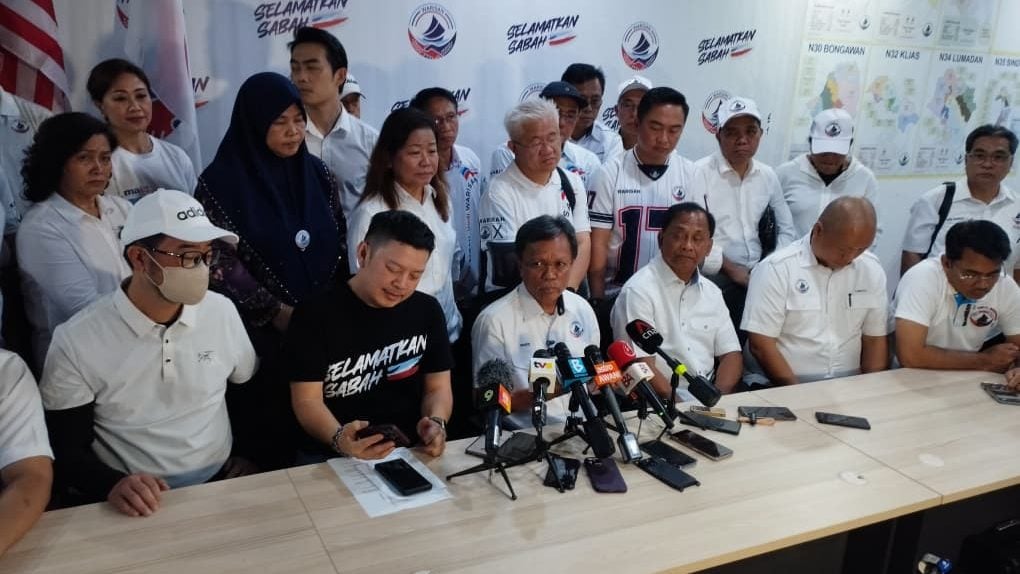
SANDAKAN: The Chinese voters in Sabah merely wanted to give DAP and PKR a taste of their own medicine and they were not concerned whether Parti Warisan could form the state government. Dr Lee Kuok Tiung, associate professor from the Social Sciences and Humanities Department of Unviersiti Malaysia Sabah, said the Chinese voters had already chosen the candidates they wanted. In a democratic country, one cannot say this was a “waste.” When Chinese voters first began supporting DAP in past years, they too did not expect DAP to be part of the government. In an interview with Sin Chew Daily, Dr Lee pointed out that Gabungan Rakyat Sabah (GRS) also had a Chinese candidate elected— Parti Gagasan Rakyat Sabah (PGRS) candidate Datuk Ben Chong Chen Bin in Tanjung Kapor. After the state government is formed, it is also possible that six additional assemblymen will be appointed, and these appointed seats may include Chinese representatives. Dr Lee believes that the biggest winner in this Sabah state election is Parti Warisan, as even they themselves did not expect to sweep all the urban seats. The biggest losers, meanwhile, are the national-level parties—especially DAP, which was wiped out, and PKR, which won only one seat. However, Dr Lee stressed that one should not assume this defeat means that Sabah DAP will collapse for good. “Sometimes the atmosphere in state elections and national elections differs. For example, in Sarawak, the state-level DAP was nearly wiped out, left with only two seats—but in the general election, they performed exceptionally well,” he said. PAS wins its first seat in East Malaysia Commenting on PAS Sabah chairman Datuk Dr Aliakbar Gulasan’s victory in Karambunai state seat — marking PAS’s first foothold in East Malaysia, Dr Lee believes strongly that Dr Aliakbar Ali won because of his personal character, strong criteria compare to other candidates and his five years of groundwork in the constituency. It is not due to religious expansion. Lee said that to build a good federal–state relationship, the Sabah state government does not necessarily need to be made up entirely of local parties. Although newly-sworn-in Chief Minister and GRS chairman Datuk Seri Hajiji Noor can form a purely local government without Warisan, Dr Lee does not believe the Yang di-Pertua Negeri (state governor) will allow a repeat of the 2018 political drama. He said GRS was unlikely to accept Warisan into the ruling coalition because many Warisan candidates had attacked GRS during the campaign. Therefore, Warisan is expected to become the opposition bloc in the state assembly. He revealed that although the anti-hopping law prevents elected assemblymen from defecting, it does not prevent them from expressing or pledging support to any side. “Hajiji has full authority to decide the direction he thinks is best, but there is certainly no room for Warisan. However, as in any situation, support from Warisan assemblymen is still welcome,” he said. Hajiji has already been sworn in as Chief Minister, with the state governor serving as the “gatekeeper,” and Barisan […]
5天前

Pakatan Harapan was the biggest loser in the Sabah election, but the one that suffered humiliating defeat was the Democratic Action Party (DAP), which suffered a complete wipeout—losing all eight seats it contested and almost vanishing from Sabah. This is DAP’s most painful lesson: Chinese votes can come, and they can also go. When a tropical whirlwind hits, what seemed like deep-rooted “safe seats” can be uprooted entirely. Chinese voters gave their support to Parti Warisan. For example, in Luyang—where the Chinese voter ratio is the highest—Warisan’s candidate received more than double the votes of DAP’s candidate. All eight seats contested by DAP were lost by huge margins. Even state chairman Datuk Phoong Jin Zhe, vice-chairman and deputy federal minister Datuk Chan Foong Hin and Sandakan MP Vivian Wong suffered crushing defeats with almost no resistance. Losses of this magnitude cannot be blamed on luck or strategy. They amount to being abandoned. DAP has only itself to blame. Ever since joining the Unity Government at the federal level, it has grown increasingly distant from the Chinese community—unable to hear their voices and even when it does hear them, it fails to take them in. The greater the Chinese community’s expectations of DAP, the greater their disappointment. Many policy distortions—from economic participation to educational imbalance—have not been corrected since DAP came to power; instead, they have worsened. For example, the Unified Examination Certificate issue has dragged on like “a dog barking at a speeding train,” drifting further away; popular university courses are increasingly closed to Chinese students; and DAP now speaks the language of the bureaucracy. On matters involving erosion of ethnic rights, Chinese community in Sabah shares the same sentiments as Chinese nationwide—their disappointment toward DAP has deepened into dissatisfaction. Meanwhile, Sabah Chinese’s strong sense of local identity has not been respected by DAP. Senior DAP leaders from Peninsular Malaysia who went to Sabah to campaign even mocked Sabah’s local sentiments, criticising the “Sabah for Sabahans” ideology while defending the appeal by federal government over the 40% net revenue entitlement. However, on Sabah’s backward basic infrastructure—its water, electricity and roads resembling Third World standards, and a poverty rate ranking second-highest in the country—DAP, as part of the government, offered only lip service and no concrete plans for improvement. Sabah Chinese watched the DAP’s campaign team arrive with a “Malayan government” mindset, pointing fingers at Sabah and asking Sabahans for support—yet unable to give any convincing reasons, and doing so with arrogance. How could Sabah Chinese possibly vote for them? Furthermore, when in opposition, DAP held high the banner of anti-corruption. Any hint of corruption would trigger loud calls for arrests—this was one of DAP’s trademarks. But when the GRS state government was collectively mired in corruption allegations, DAP kept silent. When the Prime Minister Datuk Seri Anwar Ibrahim’s senior political secretary, Datuk Seri Shamsul Iskandar Mohd Akin, was implicated in corruption, some in DAP even defended him. On the eve of polling, the dramatic arrest of Albert Tei by the […]
5天前
更多DAP
















 登入
登入
 Newsletter
 联络我们
联络我们
 登广告
登广告
 关于我们
关于我们