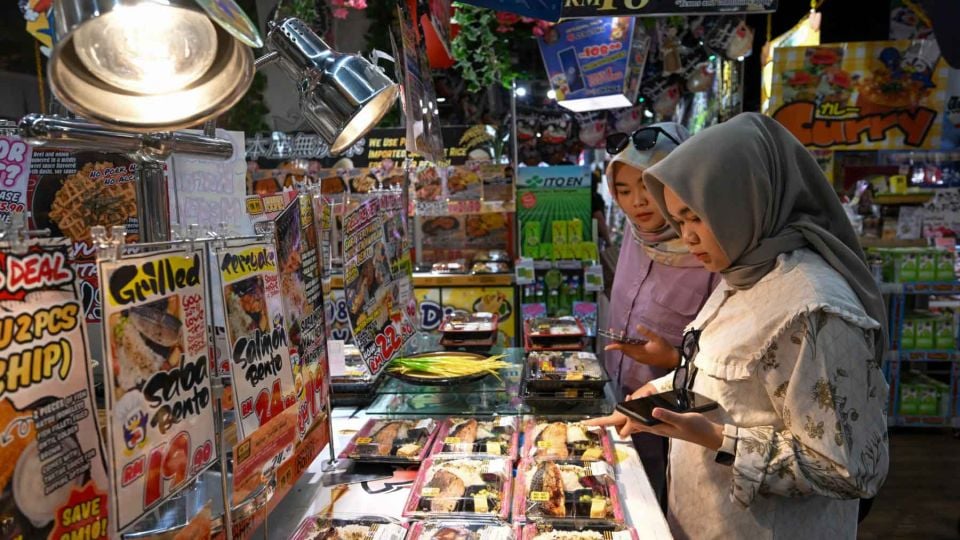
PETALING JAYA : Consumers should brace themselves for a gradual increase in prices of goods following the implementation of the new electricity tariffs effective July 1, say business groups. This is because manufacturers and those in the affected sectors may not be able to absorb higher costs and would likely pass on to consumers. SME Association of Malaysia president Chin Chee Seong said it is too early to gauge the overall increase in electricity bills for businesses. “It is difficult to say how much their electricity bills will increase at the moment. “Talk among some SMEs is that there is likely to be at least a 20% increase in electricity bills,” he said when contacted yesterday. Chin said the association will gather feedback from its members to determine how much more they have to pay for their electricity. Asked whether the SMEs will absorb the higher electricity costs, Chin said it is unlikely. “Most of them would not absorb the cost and pass it down to either their supply chain or consumers. “We should expect to see an increase in prices, especially among the SMEs, food and beverage, and the retail sectors,” he said. Federation of Malaysian Business Association vice-chairman Nivas Ragavan said some businesses may try to absorb the electricity cost increase, but not entirely. “Manufacturers have always tried to absorb cost increases where possible through efficiency measures and cost optimisation. “However, with rising cumulative costs such as raw materials, logistics, labour and now energy, many, particularly the SMEs and export-driven businesses with thin margins, will not be able to absorb the full cost,” he said when contacted yesterday. He said the manufacturing sector is expected to see its electricity bills increase between 5% and 7%. “For energy-intensive industries, the impact could be more significant, especially if they are not eligible for the Imbalance Cost Pass-Through rebate,” he added. As a result of this, Nivas said that it is likely that some portion of the increased energy cost will be passed down the supply chain. “This could take the form of adjusted pricing to downstream partners and eventually may have an impact on consumer prices, depending on the sector and product,” he said. He noted that some manufacturers will try to minimise the increase in cost where possible to remain competitive, especially in global markets. Federation of Malaysian Manufacturing (FMM) president Tan Sri Soh Thian Lai said the new electricity tariffs will not have a uniform impact on the manufacturing sector and will vary according to electricity usage. “FMM understands that 70% of medium voltage customers, many of whom are industrial users, will have a reduction in electricity bill ranging from 4% up to 18% depending on the load factor. “The higher their load factor, the higher the reduction in their bills,” he said when contacted yesterday. However, Soh said the remaining 30% with a low load factor may see an increase of between 3% and 10% in the electricity bills. “Some customers in this category have installed solar […]
5月前

MANILA: In its Regional Market Outlook for the second half of the year, Singapore’s DBS Bank maintained its 6,900 year end target for the benchmark Philippine Stock Exchange Index (PSEi). “Key factors that weighed down the Philippine equities market in the last 24 months have turned favorable,” DBS said in its report. The target is still based on a projected equity risk premium of 490 basis points, implying that investors are cautious about buying stocks at a high price amid lingering risks. But in opting to maintain its index outlook, DBS said inflation in the Philippines had “eased meaningfully,” while the peso also managed to regain its strength against the US dollar. Inflation cooled to a five-year low of 1.3 percent in May from 1.4 percent in April due to lower utility costs. Strong peso Meanwhile, the local currency improved to 55.62 (RM4.22) against the greenback on Friday from 55.77 (RM4.23) on Thursday. Japan’s MUFG Bank also anticipates the peso to appreciate to 54.50 (RM4.14) against the US dollar by the first quarter of 2026. With these factors in play, DBS pointed out that the Bangko Sentral ng Pilipinas now had more room to cut rates. “We believe these developments set the stage for a constructive Philippine equity backdrop in [the second half of 2025],” DBS said. It likewise noted that the Philippines had the best economic growth outlook in the region at 5.8 percent this year, versus Singapore’s 2 percent, Thailand’s 1.8 percent and Indonesia’s 4.8 percent. Adding to this optimistic outlook is the fact that the Philippines was less reliant on trade for economic growth compared with its peers, DBS explained. Thailand’s economy, for example, was the most export-driven, making it the least attractive market for investors. Once US President Trump’s 90-day tariff truce ends on July 31, the Philippines will be one of the countries to see the weakest impact. Semiconductors, electronics assembly and agricultural products were among the main goods it exported to the United States last year. These resulted in a net export surplus of RM22.47 billion ($5.3 billion), representing 1.2 percent of the Philippines’ gross domestic product. This surplus means that the Philippines exported more products to the United States than it imported, earning for it an original tariff of 17 percent that had also been paused. Semiconductors Still, DBS said, “We note that the impact may be even less significant, as semiconductors—its key export—remain exempt from proposed tariff measures.” Earnings outlook for companies in the benchmark PSEi also remained intact at 11 percent this year and 7 percent in 2026, mainly because their revenue drivers still came from domestic operations. “Key sectors—such as banks, utilities, property and conglomerates—are largely shielded from external trade shocks, further supporting resilient earnings trajectory despite elevated global uncertainty,” DBS said.
6月前
更多Inflation


















 登入
登入
 Newsletter
 联络我们
联络我们
 登广告
登广告
 关于我们
关于我们