26 October 2025 marks a historic moment. In Kuala Lumpur, Timor-Leste is officially joining ASEAN as its 11th member state. For most Malaysians, the name Timor-Leste may feel distant; a small country on the periphery of Indonesia, known mainly through fragments of history and humanitarian headlines. Yet its accession is not just another expansion of ASEAN. It is the return of a long-ignored story to Southeast Asia’s collective consciousness, one that reminds us of what regional solidarity once meant, and what it could still mean. From resistance to nationhood Timor-Leste’s history is written in endurance. Colonized by Portugal for more than four centuries, it declared independence in 1975, only to be invaded by Indonesia nine days later. For 24 years, the Timorese people lived under occupation, resisting through the mountains, through art, and through silence. Nearly a third of the population perished. Yet the resistance persisted, led by figures such as Xanana Gusmão and José Ramos-Horta, who carried their struggle from the jungles to the United Nations, from guerrilla warfare to diplomacy. In 1999, the UN supervised a referendum, and the Timorese voted overwhelmingly for independence. The cost was immense, including destroyed homes and lives uprooted. When peacekeepers entered Dili, the city was in ruins. But amid the ashes, the Timorese people rebuilt. In 2002, the world witnessed the birth of Southeast Asia’s youngest nation; fragile, poor, yet fiercely proud. Two decades later, the journey continues. Timor-Leste remains small with a population of 1.3 million and an economy still reliant on oil and gas, but it is also among the region’s most democratic societies. Power transitions peacefully, elections are competitive, and civil society is vibrant. In a region where democracy often retreats, this is no small achievement. Malaysia’s relationship with Timor-Leste, however, is not a new one. During the occupation years, Kuala Lumpur, like other ASEAN capitals, upheld the principle of non-interference, aligning with Jakarta’s stance that Timor-Leste was an “internal matter.” That silence reflected ASEAN’s cautious diplomacy, but it also left a moral wound. When the violence broke out in 1999, Malaysia became part of the UN-sanctioned peacekeeping force (INTERFET). Our troops were among the first to land in Dili to help restore order. It was a moment of quiet redemption, when Malaysia moved from silence to solidarity. Since then, diplomatic ties have deepened. Malaysian educators, engineers, and advisers have worked in Dili; Timorese students have studied in Kuala Lumpur. These small but meaningful connections have built a bridge that now finds new significance as Malaysia chairs ASEAN during Timor-Leste’s formal admission. When Malaysia stood up: The APCET story To understand why Timor-Leste’s membership matters, we must also remember an event that tested Malaysia’s conscience long before independence was achieved; the Asia Pacific Conference on East Timor (APCET) in 1996. At that time, Malaysia was not yet ready to talk openly about Timor-Leste. The Suharto government in Indonesia was still powerful, and the issue was seen as a threat to regional harmony. Yet a coalition of Malaysian NGOs and […]
1月前
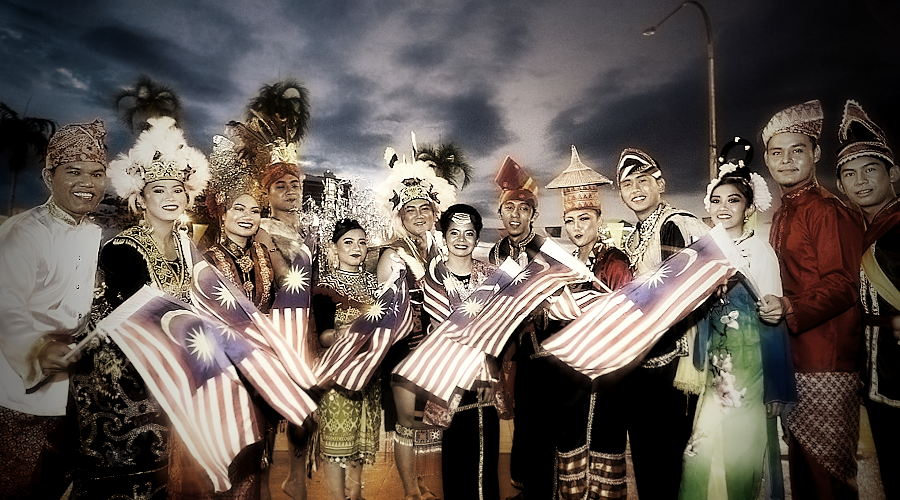
Every Malaysian knows the drill. Whether it is a school registration form, a university application, a government scholarship, or even a simple survey, the first questions often demand the same information: race and religion. For decades, these boxes have been quietly filled in by millions of Malaysians. To be fair, there are contexts where such information is necessary. For example, in population censuses, for targeted health data, or for matters relating to religion itself. But what troubles many Malaysians is the routine demand for these details in areas where they seem unnecessary: in education admissions, job applications, or basic public services. With each tick of a box, an unsettling question arises: why must our identity, in all its complexity, be reduced to these two categories, even when they are irrelevant to the opportunity or service at hand? As Malaysia marks its 62nd Hari Malaysia, it is worth asking why race and religion remain institutionalized in our forms and systems, and what this reveals about the unfinished work of nation-building. Far from being a neutral exercise, the act of categorizing Malaysians by race and religion shapes opportunities, reinforces hierarchies, and conditions how we see one another. The insistence on recording race and religion is not accidental. It has deep roots in Malaysia’s colonial and postcolonial history. Under British colonial administration, communities were classified along racial lines: Malays were associated with agriculture, Chinese with commerce, and Indians with plantation labor. These categories were never neutral descriptors; they were tools of governance that maintained divisions while facilitating control. As we are aware, there are still debates today about when Malaysia’s true “independence” should be marked: in 1957, when the Federation of Malaya gained sovereignty, or in 1963, when Malaysia was formed with Sabah, Sarawak, and (briefly) Singapore. Both moments are significant, but they also set the stage for how race and religion were managed in the new nation. The 1957 Constitution enshrined the special position of Malays and other Bumiputera groups alongside guarantees for other communities, a compromise often described as the “social contract.” Yet the optimism of those early years was shaken by the 1969 riots, after which the New Economic Policy (NEP) was introduced in 1971 and fully institutionalized by 1973. While the NEP helped to reduce poverty and expand the Malay middle class, it also entrenched racial identification as a permanent feature of governance, making race not just a matter of identity but a gatekeeper to education, housing, and employment opportunities. This legacy lives on in today’s bureaucratic practices. To apply for a government university place, a housing loan, or a civil service position, one must still declare race and religion. What was once designed as a temporary corrective measure has become a permanent fixture of Malaysian life. Everyday implications: More than just a box Some argue that filling in race and religion is harmless, as a mere bureaucratic formality. Yet the implications are far-reaching. These categories do not just sit on paper; they determine outcomes. Consider the case of […]
3月前

Rumors are swirling again: Khairy Jamaluddin may be making a return to Umno, the very party that expelled him in 2023. Rafizi Ramli has stepped down from his ministerial role after losing in PKR’s internal polls recently. Nik Nazmi Nik Ahmad, once a rising star of environmental reform, has also resigned from his cabinet post. Just a few years ago, these were the faces many Malaysians pinned their hopes on: young, articulate, data-savvy, and principled. Today, they appear sidelined, disillusioned, or recalibrating their paths. At the same time, Nurul Izzah Anwar, after years of political turbulence and critique, has returned to a leadership role, winning the PKR deputy presidency. Her re-emergence adds complexity to the picture: not all young leaders are retreating, but many continue to navigate a system that rewards conformity over innovation. What does this tell us? On one level, it’s about internal party dynamics, ministerial frustrations, and the wear and tear of governing in a coalition system. But on a deeper level, these developments point to a fundamental political question Malaysia can no longer avoid: Are we truly ready to embrace a new generation of leaders, or are we still beholden to the old political script, endlessly recycling names and clinging to personalities instead of principles? These recent dramas are not isolated incidents. They reflect a broader political system that often sidelines those who challenge its entrenched norms. Khairy Jamaluddin, once viewed as a moderate within Umno and known for his steady handling of the Covid-19 crisis, was removed after clashing with the party’s leadership. His possible return to Umno now raises important questions: is it a tactical recalibration, or a sign that even reform-minded figures must eventually conform? Rafizi Ramli’s trajectory tells a similar story. Some welcomed his return to politics as a chance to inject policy-focused thinking into government. Yet his resignation in 2025, following a party leadership loss, points to deeper frustrations with internal party dynamics and the limitations of governing within a fragmented coalition. In many democracies, such resignations would trigger serious reflection within parties about leadership renewal and political direction. In Malaysia, they pass with little more than passing commentary, underscoring how normalized political inertia has become. Familiar faces, familiar failures The issue isn’t merely the exit of new leaders. It’s the persistent recycling of old ones. Mahathir, Najib, Anwar: Malaysia’s political discourse remains anchored to a narrow circle of familiar names. Some may have played historic roles, but history should not dictate the future. There is something almost ritualistic about our national tendency to revert to the same figures in times of uncertainty, as if political navigation is only possible through well-worn paths. Yet these very individuals were architects, or at the very least, beneficiaries of the political system we now recognize as flawed. The rumored return of Khairy Jamaluddin to Umno, if it materializes, might be a calculated move. However, it also reflects a deeper malaise: Malaysia’s political landscape often presents reform-minded actors with two choices: be absorbed into the […]
6月前
更多Khoo Ying Hooi









 登入
登入
 Newsletter
 联络我们
联络我们
 登广告
登广告
 关于我们
关于我们