Every Malaysian knows the drill. Whether it is a school registration form, a university application, a government scholarship, or even a simple survey, the first questions often demand the same information: race and religion. For decades, these boxes have been quietly filled in by millions of Malaysians. To be fair, there are contexts where such information is necessary. For example, in population censuses, for targeted health data, or for matters relating to religion itself. But what troubles many Malaysians is the routine demand for these details in areas where they seem unnecessary: in education admissions, job applications, or basic public services. With each tick of a box, an unsettling question arises: why must our identity, in all its complexity, be reduced to these two categories, even when they are irrelevant to the opportunity or service at hand? As Malaysia marks its 62nd Hari Malaysia, it is worth asking why race and religion remain institutionalized in our forms and systems, and what this reveals about the unfinished work of nation-building. Far from being a neutral exercise, the act of categorizing Malaysians by race and religion shapes opportunities, reinforces hierarchies, and conditions how we see one another. The insistence on recording race and religion is not accidental. It has deep roots in Malaysia’s colonial and postcolonial history. Under British colonial administration, communities were classified along racial lines: Malays were associated with agriculture, Chinese with commerce, and Indians with plantation labor. These categories were never neutral descriptors; they were tools of governance that maintained divisions while facilitating control. As we are aware, there are still debates today about when Malaysia’s true “independence” should be marked: in 1957, when the Federation of Malaya gained sovereignty, or in 1963, when Malaysia was formed with Sabah, Sarawak, and (briefly) Singapore. Both moments are significant, but they also set the stage for how race and religion were managed in the new nation. The 1957 Constitution enshrined the special position of Malays and other Bumiputera groups alongside guarantees for other communities, a compromise often described as the “social contract.” Yet the optimism of those early years was shaken by the 1969 riots, after which the New Economic Policy (NEP) was introduced in 1971 and fully institutionalized by 1973. While the NEP helped to reduce poverty and expand the Malay middle class, it also entrenched racial identification as a permanent feature of governance, making race not just a matter of identity but a gatekeeper to education, housing, and employment opportunities. This legacy lives on in today’s bureaucratic practices. To apply for a government university place, a housing loan, or a civil service position, one must still declare race and religion. What was once designed as a temporary corrective measure has become a permanent fixture of Malaysian life. Everyday implications: More than just a box Some argue that filling in race and religion is harmless, as a mere bureaucratic formality. Yet the implications are far-reaching. These categories do not just sit on paper; they determine outcomes. Consider the case of […]
3月前
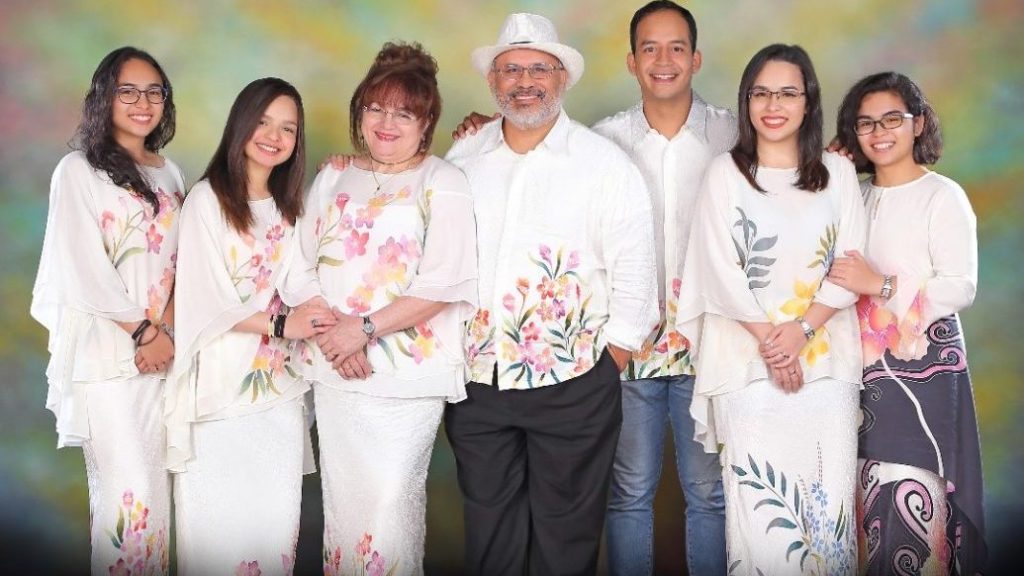
While most people express patriotism through flags, food, multiculturalism, or songs, this family has chosen a unique way—by naming their children to reflect their love for the nation. Merdeka, Malaysia, and Mayday are three sisters, they are children of a Malaysian–Venezuelan couple. Their mother Tun Kamalu Victoria Zaman told Sin Chew Daily that her third daughter was named Malaysia, inspired by a travel poster featuring the Shah Alam Mosque. Her full name is Tun Malaysia Venecia—“Venecia” being the Latin name for Little Venezuela, she said. “Merdeka” was inspired by a visit to the National Museum, where they watched a documentary of Tunku Abdul Rahman shouting “Merdeka” seven times during independence. Her English name is spelled Mardeka instead of Merdeka because the mother wanted all her children’s names to begin with “MA,” so she changed the “e” to an “a.” Her full name is Tun Mardeka Victoria, symbolising independence and victory. “Mayday” was named after a book titled Mayday, about an American spy fighter plane that crashed in the Soviet Union during the Cold War. “When my husband was reading this book, our daughter was born, and the name also started with ‘MA’ in its pinyin form.” Their other two children are named Abdul and Maria, both with special meanings. Victoria explained that her eldest son, Tun Abdul Luis, was named after his grandfather Abdul Zaman, a police officer who defended the nation during the Malayan Emergency and the Malaysia–Indonesia Confrontation. “Maria’s name was taken from my great-grandmother and grandmother, both of whose names began with ‘MA,” she said. Tun Malaysia Venecia faces challenges growing up due to her unique name. She first realised her name was unusual in kindergarten. Every time her name was called, it would trigger laughter. “At first, I thought they were just joking, but later I was bullied frequently at school. I even questioned my parents about why they chose this name. But now, I’ve not only accepted it—I also enjoy the benefits and fun that come with it,” said Tun Malaysia Venecia. Now, her name has become an icebreaker at work. “Every time I introduce myself, people find it unbelievable,” she said. Her work email is often mistaken for the general corporate address of a Malaysia branch. “In the era of the slogan ‘Malaysia Boleh’ (‘Malaysia Can!’), whenever someone shouted it at me, I’d laugh and reply: ‘Of course I can… but can you?’” She admitted that the name “Malaysia” has shaped part of her identity. “But not entirely—because I am still myself, regardless of my name.” As for Merdeka, she feels proud of her name. “Merdeka” too was mocked because of her name. Some people would imitate Tunku Abdul Rahman shouting “Merdeka” in front of her. “At first, it didn’t feel good, it felt like bullying, but as I grew older, I learned to accept it,” she said. Once, she fired back at a teaser: “You want independence and freedom? Then you’ll have to come to me,” she said. When she returned to Malaysia, […]
3月前
更多Merdeka






 登入
登入
 Newsletter
 联络我们
联络我们
 登广告
登广告
 关于我们
关于我们