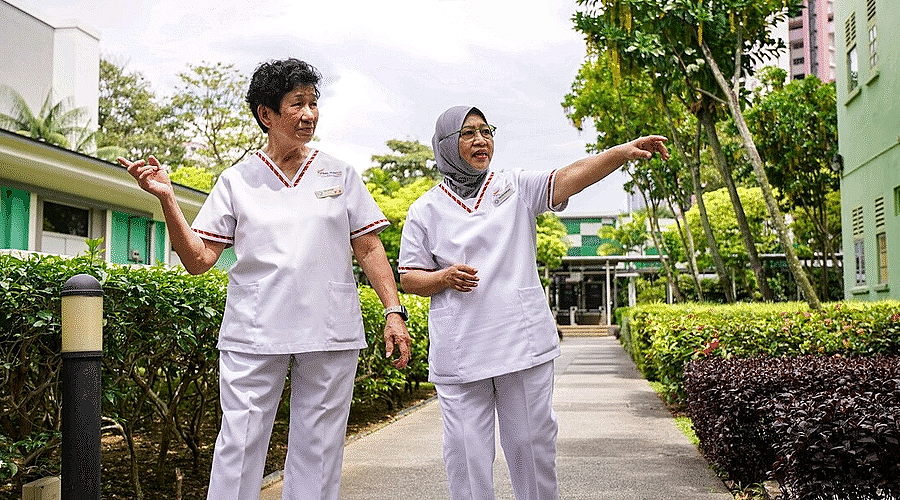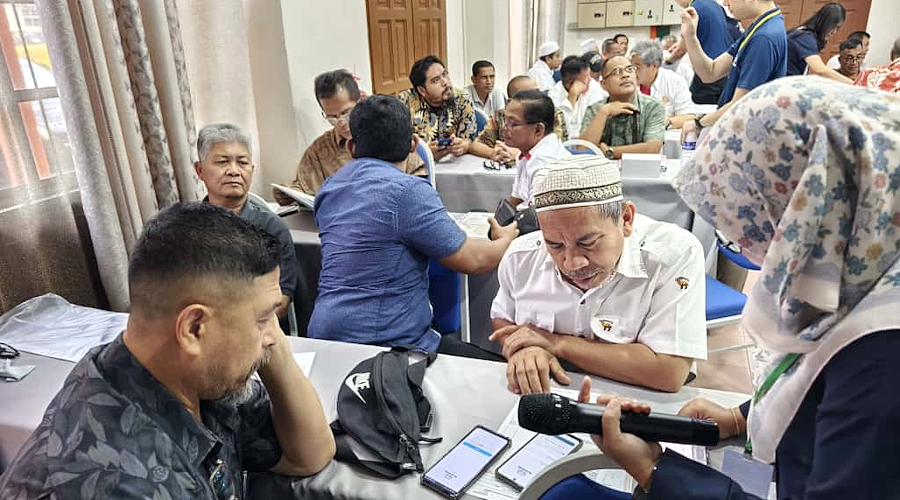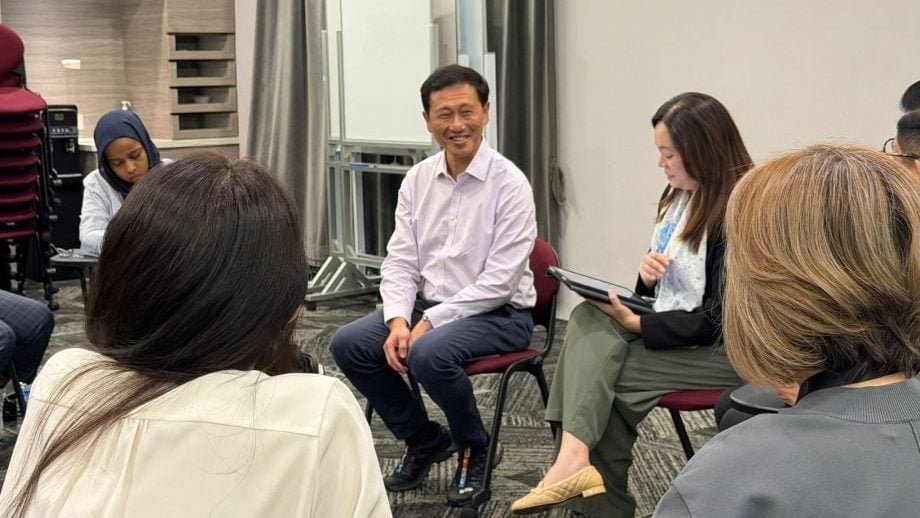
SINGAPORE: Despite “overly aggressive” recruitment agency paints the perception of Singapore pinching Malaysian doctors and nurses, Singapore develops its own medical workforce, says Minister of Health of Singapore Ong Ye Kung. However, Ong did not provide the figures. “I don’t know the exact details,” Ong said in a dialogue at the 17th Malaysian Journalists Visit Programme organised by Singapore’s Ministry of Digital Development and Information recently. When Sin Chew Daily reporter asked about the proportion of Malaysian doctors and nurses within the healthcare sectors in Singapore, Ong said the proportion was low. “I don’t have the exact figure on hand, but as I’ve said before, more than 90% of our doctors are trained locally,‘’he said, Asked whether Malaysian medical professionals predominantly work in Singapore’s public or private sector, Ong noted that 90% of inpatient care (hospital services) in Singapore is provided by public institutions. “Based on that structure, the vast majority of them would naturally be in the public sector,” he said. Apart from Malaysians, Ong said Singapore also employs doctors from the United Kingdom, India and other countries. “In fact, anyone with the right qualifications is welcome here. We do not favour any particular region — the only criterion is professional competence,” he said. On the issue of manpower shortages, Ong acknowledged that Singapore is indeed facing a shortfall of nurses. “This is a global issue,” he said. Although Singapore has nursing schools, many nurses leave the profession each year. As a result, the government recruits nurses from multiple countries, including India, Sri Lanka, Myanmar and China. “Those who pass the qualification exam undergo training in Singapore, and some eventually return home. This is seen as a form of regional cooperation to uplift nursing standards,” he said. Ong serves as member of parliament for the Sembawang GRC in northern Singapore where the Johor–Singapore Rapid Transit System (RTS Link) has also been a topic of great interest among his constituents. “Residents are very excited. Travel between Singapore and Johor has already been improving over the years, with streamlined immigration procedures. “Today, many Singaporeans travel frequently to Johor. I keep in close contact with MPs and state assembly members across the border — they joke that during elections, they often encounter groups of Singaporeans while canvassing, just as we sometimes meet large numbers of Malaysians here,” he said. Many of his constituents travel to Johor for various reasons, with healthcare becoming an increasingly common one. “They are happy to receive dental treatments or basic health checks there, finding the prices reasonable and the service efficient. For surgeries, they return to Singapore to benefit from subsidies,” he said. Ong said that once the RTS Link opens, more frequent cross-border movement, business exchanges and tourism will create new opportunities. Not only will many Singaporeans continue shopping in Johor, he said, Singapore also hopes to attract more Malaysians to shop here. “This will require local businesses to rethink their strategies — how do we differentiate our services? Since we can’t compete purely on price […]
7天前
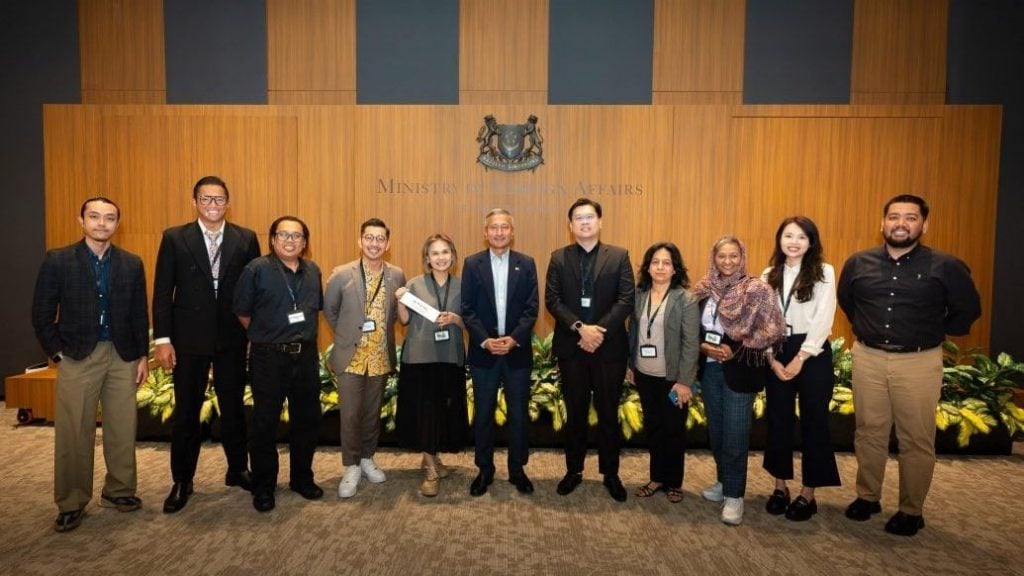
SINGAPORE: When it comes to Johor-Singapore ties, this is how Foreign Minister of Singapore Vivian Balakrishnan sees it – a married couple who divorced yet still share the same room — it’s complicated. “Our political paths have diverged, but we remain permanent neighbours,” he said. Balakrishnan stressed that Singapore and Johor can never be fully separated — not physically, economically nor culturally. “We have relatives on both sides of the Causeway. Our futures are intertwined. It is a complex, essential and critical relationship.” Given the closeness of the two sides, issues will inevitably arise from time to time, he said, whether in physical terms, emotionally, politically, culturally, or even family ties. “I’m sure all of you here have relatives across the border — I certainly have relatives in Malaysia,” he said. Balakrishnan was responding to Sin Chew Daily during the “17th Malaysian Journalists Visit Programme” organised by Singapore’s Ministry of Digital Development and Information. On Singapore’s ties with East Malaysia, Balakrishnan said he was pleased with the establishment of the Sarawak Trade and Tourism Office Singapore (STATOS). Singapore has proposed to Kuala Lumpur the setting-up of consulates in both Sabah and Sarawak to promote people-to-people links, interactions, as well as the flow of investment and trade between Singapore and East Malaysia. “We are waiting for approval from Kuala Lumpur,” he said. The long-standing water agreements between the two countries also came up during the dialogue. When asked whether discussions had begun on the agreement due to expire in 2061, Balakrishnan said talks have been ongoing, with the latest round held just last week. “We used to have two agreements — one signed in 1961 and another in 1962. The 1961 agreement has expired. In 2011, I handed the water plant back to His Majesty — you can find the photos — and we allowed that agreement to lapse. “ So now only the 1962 agreement remains. It has a 99-year tenure and expires in 2061. That is where we are now.” The Kuala Lumpur–Singapore High-Speed Rail (HSR) was another topic raised. Asked if Singapore is open to revisiting the project, Balakrishnan said: “The project was originally proposed by then-prime minister Najib. “We agreed, we signed, we even cleared a golf course and carried out infrastructure changes. “We spent money preparing. Later, Kuala Lumpur changed its mind, and we accepted that. That chapter ended.” However, he added that Singapore would consider any new proposals or fresh perspectives. “We remain open,” Balakrishnan said. During this visit, the Malaysian delegation met four Singapore ministers: Balakrishnan; Minister for Social Policies Coordination and Health Minister Ong Ye Kung; Minister for Digital Development and Information Josephine Teo; and Acting Minister for Muslim Affairs and Senior Minister of State for Home Affairs Faishal Ibrahim.
7天前
更多Singapore






 登入
登入
 Newsletter
 联络我们
联络我们
 登广告
登广告
 关于我们
关于我们