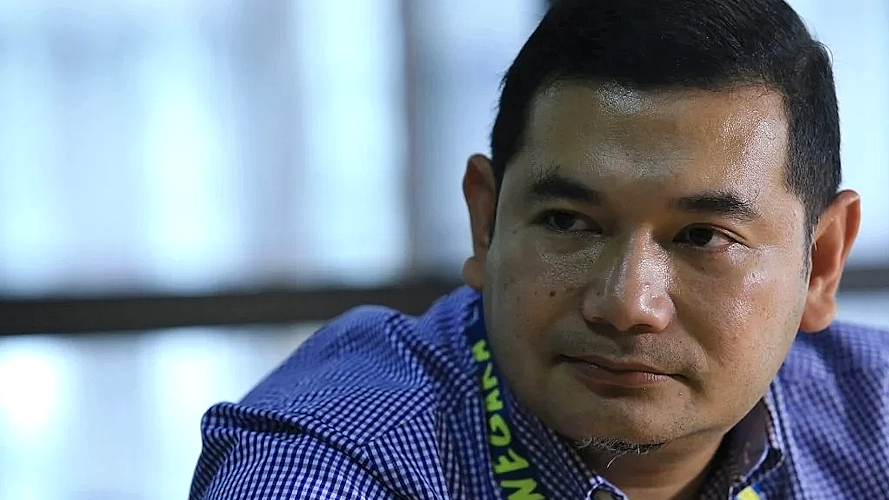
Many people shook their heads in dismay, saying this is worse than the underworld, even worse than loan sharks. I’m referring to the incident where Datuk Seri Rafizi Ramli’s young son was injected with a syringe threatening AIDS— vicious and despicable! The underworld and rivals, when in conflict, usually try to resolve matters through negotiation. If talks fail, they may issue threats—but they do not target children. Loan sharks, when collecting debts, also go after the debtor. The harsher ones may harass family members—splashing paint, pasting threatening notices—but I have never heard of injecting a child with a syringe. As the saying goes, even thieves have their code of conduct. Bad people too have a bottom line. Otherwise, they’re not human. But Rafizi’s young son, in broad daylight, was dragged out of a car by helmeted masked men and injected with an unknown liquid from a syringe. After that, Rafizi’s wife received a text message warning her to “keep quiet, or else AIDS,” followed by three syringe emojis. It has yet to be confirmed whether the liquid contained HIV, but the shadow of fear will haunt the child and his family for a long time, perhaps for life. This is no ordinary crime. Almost everyone believes it is politically related. The masked men were likely hired thugs. Behind them, there must be someone else with a specific motive—to intimidate and warn Rafizi through this act. Since resigning as a minister, Rafizi has become one of the boldest political voices. He criticizes government policies, exposes cases of abuse of power and corruption, even revealing names. He reveals the failures and wrongdoings of the unity government for all to see and also exposes the dirty dealings within PKR to the public. Because of Rafizi’s revelations, some people’s political-business connections have been forced into the spotlight, making them retreat temporarily where their interests were affected. For that, they hate him to the core. Even when PKR was still in the opposition, Rafizi already had bitter enemies within the party. And I’m not referring to Datuk Seri Mohamed Azmin Ali, Datuk Seri Saifuddin Nasution Ismail, or Nurul Izzah Anwar. When PKR came to power, conflicts grew worse and irreconcilable. Rafizi and his faction later lost in the party elections and it is said that certain hidden maneuvers played a role. Rafizi himself suspects his son’s assault is linked to information he recently obtained from a whistleblower—the very person he has been exposing relentlessly these past two months. Rafizi can give up his position and resign voluntarily; he has also faced court cases before and is unafraid of prison. He cannot be silenced, cannot be bought over and cannot be intimidated. Since his enemies couldn’t deal with him, they turned their attacks toward his family. This is the lowest of the low—something one might expect only in lawless countries ruled by gangs and drug cartels. Yet it has now happened in Malaysia, showing how degraded our politics has become. What’s worse, it involves PKR—a […]
4月前
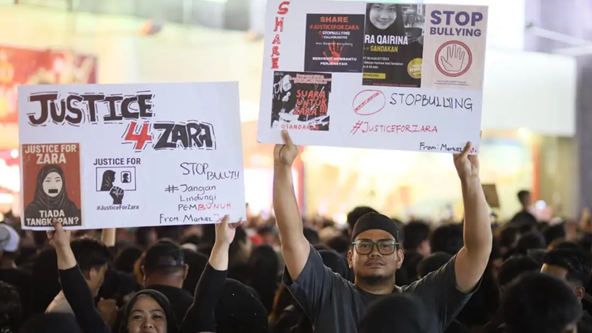
This is the first time that Malaysia has seen such a large-scale civil rights action, the first of its kind in Malaysia. Tens of thousands of Sabahans took to the streets of Sandakan, Tawau, and Lahad Datu of their own accord to demand justice for a young girl named Zara Qairina Mahathir. People held up banners and chanted, “Justice for Zara!” They even composed a sorrowful song about Zara that is being sung all over Sabah. Thirteen-year-old Zara was a student at a religious boarding school. To her parents, teachers, and classmates, she was a well-behaved student. However, on July 16, she was found unconscious after a fall from her dormitory building. She was taken to the hospital but died from her injuries. The initial police report stated that Zara fell from the third floor of the dorm and that there was nothing suspicious about the case. The school did not conduct an investigation and the principal even told Zara’s mother not to pursue the matter. But the case was not that simple. Zara’s mother claimed that Zara had repeatedly complained to her that older students at the school were bullying her and that she was afraid to go to school. A classmate of Zara also claimed that before the fall, they saw Zara huddled in a corner, seemingly injured. Another student reported hearing a commotion. Zara’s family also found many wounds, bruises, and swelling on her body, which were unusual. However, the police did not take further action or perform an autopsy. Zara’s mother didn’t give up. She provided the police with a voice recording of Zara’s phone call where she claimed she was being bullied and collected information on other students who had been bullied. She also hired a lawyer to request that authorities reopen the investigation and apply for an exhumation and autopsy. The Attorney-General’s Chambers re-examined the case, returned the original Zara case report to the Sabah police, and ordered an exhumation and autopsy. The next day, protest rallies appeared in various towns across Sabah to support Zara’s family and demand justice for her. Why has the Zara incident attracted so much attention, even leading to street protests? The reason is that Zara’s death has too many unanswered questions while the school, police and Ministry of Education have not handled them appropriately. People are aware of the school’s bullying record, but the police did not conduct a thorough investigation. Despite the wounds and bruises on her body, the police didn’t perform an autopsy. Rumours are also rampant that Zara was put in a large washing machine, soaked in water, and spun in the drum. The school adopted a “peace-at-all-costs” attitude. While students and parents named several students suspected of bullying Zara and provided a list of habitual bullies, the school did not take action. As for the Ministry of Education, its typical response was to leave the matter to the police. The Minister of Education, Fadhlina Sidek, even warned the public not to spread “rumours.” These […]
4月前
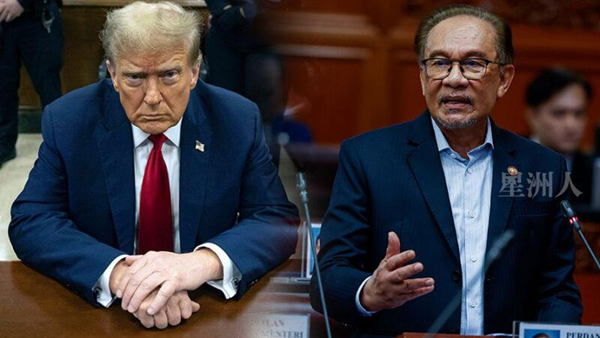
Malaysia does not agree with the United States that the Bumiputera policy is discriminatory, according to Prime Minister Datuk Seri Anwar Ibrahim. Claiming that this is the bottom line, Malaysia stands firm on its existing policies. Hence, the US increases its tariff on Malaysian goods by an additional 1 percent from 24 percent to 25 percent. The 1 percent may seem small but the increase is significant. Do not forget that for Indonesia, the US dropped the tariff from 32 percent to 19 percent, and Vietnam from 46 percent to 20 percent. This means Malaysia will lag behind its neighbors in attracting investments and export competitiveness. Does the “bottom line” by Anwar meet the long-term interest of Malaysia? This is something that the government of Malaysia ought to take into consideration seriously. As it turns out, it’s not just the non-Bumiputeras in Malaysia who are dissatisfied with the Bumiputera policy—even foreign countries (such as the US) are displeased. How exactly the US is unhappy, we don’t know for certain. But it’s well known that since the New Economic Policy (NEP) was launched in 1971, the goal has been to secure 30 percent equity for Bumiputeras. Government projects and contracts are prioritized for Bumiputera contractors; certain sectors are reserved exclusively for Bumiputeras; Bumiputera companies enjoy various incentives and privileges; and top management positions in GLCs are, by unwritten rule, reserved for Bumiputeras. Globally, it’s nearly impossible to find another country with such racially-driven policies. As a result, economic participation opportunities for non-Bumiputeras and foreign investors are effectively blocked, or at least half the door is shut. The Bumiputera policy erects a high wall in the economic realm—non-Bumiputeras cannot easily enter. And if they do, it often requires going around through informal channels, incurring additional costs—something not all non-Bumiputeras can do. This could be one of the reasons the Americans consider the policy discriminatory. The US has the upper hand. If you insist on holding your ground on the Bumiputera policy, then be prepared to accept higher tariffs. The Americans simply don’t care—Southeast Asia offers plenty of alternatives. Vietnam, Thailand, Indonesia, Singapore, and the Philippines offer better terms—and none of them have Bumiputera-style policies. What Trump wants is fair trade—though admittedly, his version of “fair” is tilted in favor of America. It’s your choice whether to engage. If Malaysia insists on clinging to the Bumiputera policy, then it can step aside. However, for the non-Bumiputeras—who are the biggest victims of the Bumiputera policy—do not have the leverage that the US does. No matter how unhappy they are, they can only grit their teeth to endure. In the era of “Madani,” they’re even more voiceless. During the Barisan Nasional era, the DAP would at least speak out against the Bumiputera policy in defending non-Bumiputeras. But once they joined the government, they stopped bringing it up, as if the policy had been erased from their memory. Now, the remarks from the Americans have once again reopened old wounds for the non-Bumiputera community. Anwar’s statement […]
5月前
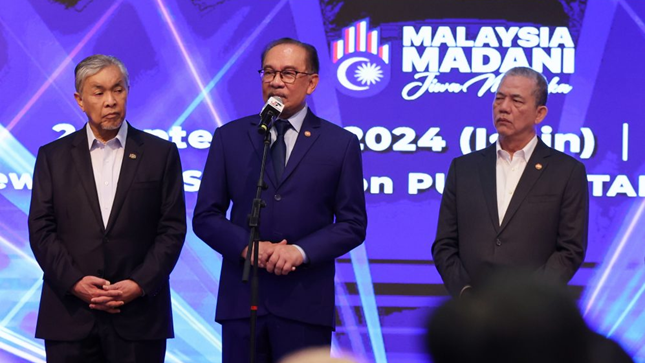
The three new chief justices have been named and Tan Sri Ahmad Terriruddin Mohd Salleh is not in the list. Bar Council welcomes the appointment while Rafizi Ramli can take a break from firing salvo. As a result, the anti-Anwar sentiment cools down, narrowly avoiding a political crisis. Probably relieved, Datuk Seri Anwar Ibrahim fired a shot much later by saying that he had never nominated Terriruddin. The claims made by outsiders were baseless but a politically-motivated by the legal fraternity. Is this really the case? People know the truth. What Anwar failed to explain is why the government delayed addressing the brewing storm over judicial appointments. Terriruddin was widely speculated to be the preferred candidate, yet he never responded to the rumours. A leaked JAC (Judicial Appointments Commission) meeting record showed someone had indeed nominated Terriruddin and the government never denied the authenticity of the documents. This time, the government did not nominate Terriruddin. However, if the Bar Council did not initiate the “Walk for judicial independence”, disclosure by Rafizi and the public outcry, things might have gone differently. With Datuk Wan Ahmad Farid Wan Salleh elevated to Chief Justice of the Federal Court, the public has largely reacted positively, reflecting that Terriruddin was broadly unacceptable. Anwar followed the public sentiment—better to turn around before going over the cliff. But surviving this judicial crisis doesn’t mean Anwar is out of the woods. He now faces five major crises that trap him: Oppositions unite – July 26 rally looms The “Turun Anwar” rally on July 26 is shaping up to be more than just a comic-book-style doomsday stunt like the one on July 5. It could be a political tsunami. The oppositions, previously divided by factions as one is suspicious and sabotage each other, have now reconciled. Parti Pribumi Bersatu Malaysia and PAS have reunited plus the 100-year-old Tun Dr Mahathir Mohamad, are pushing a large-scale anti-Anwar campaign. Muhyiddin is also engaging with parties he rarely dealt with before, including MUDA, the Socialist Party, P. Ramasamy’s Urimai Party, and the Malaysian Indian People’s Party—clearly trying to appeal to non-Malay groups. A recent rally packed the Sultan Abdul Halim Stadium in Alor Setar. Even if not the 30,000 crowd claimed by PAS, photos suggest over 10,000 people. Given this momentum, the July 26 rally could be even larger, further fueling the anti-Anwar wave—and Anwar is in a tight spot. UMNO leverages on Najib’s clemency addendum The Attorney-General’s Chambers recently admitted in court that the royal addendum for Najib does exist—forcing Anwar to face the issue head-on. The 160 Umno division chiefs convened and unanimously demanded the government enforce the addendum, allowing Najib to serve his sentence at home. This made UMNO’s collective stance clear. Even Datuk Seri Dr Ahmad Zahid Hamidi who tries to protect Anwar, is now in a tough position. Some political observers believe Zahid himself orchestrated this. Given his control over UMNO, the division chiefs wouldn’t act without his directive or approval. If Anwar doesn’t compromise with […]
5月前
更多Tay Tian Yan






 登入
登入
 Newsletter
 联络我们
联络我们
 登广告
登广告
 关于我们
关于我们