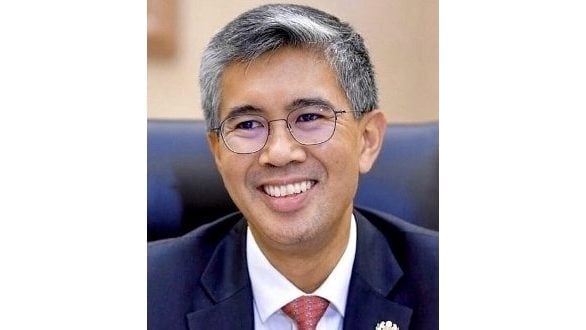
It’s not a stretch to say that the 47th ASEAN Summit and its related meetings were the most consequential—and successful—in our region’s history. Last week, Malaysia played host to virtually the entire world, when political, business and civil society leaders from Africa, the Americas, Asia, Europe and Oceania descended on Kuala Lumpur. Our well-attended ASEAN Summit bucked global trends. In a time of fragmentation, it was a feat to see the US, China, India, Russia, Brazil, South Africa and other countries congregate in our capital. It’s a timely reminder of ASEAN’s continued relevance not only as a bloc, but also as a neutral platform of engagement, and a convenor of major economies. Understandably, Donald Trump stole the show, as did the Agreement on Reciprocal Trade (ART)—but these do not dilute the numerous achievements of Malaysia’s 2025 ASEAN Chairmanship. A successful chairmanship First: ASEAN is now 11-strong. It was an emotional moment and Malaysia is proud to have facilitated Timor-Leste’s signing of the Declaration of Accession. Second, Ministry of Investment, Trade and Industry (MITI), together with other relevant ministries under the Economic Pillar, would be able to complete most of the 18 Priority Economic Deliverables (PEDs) by the end of 2025. The quest to increase intra- and inter-regional trade received a major boost with the upgrade of the ASEAN Trade in Goods Agreement (ATIGA) and the ASEAN China Free Trade Area (ACFTA 3.0)—bringing us in line with the latest developments in the digital and green economies, and modern supply chain connectivity. Furthermore, we’re confident that the Digital Economic Framework Agreement (DEFA), targeted to be signed next year, will provide policy clarity on all aspects of our digital economy, supported by energy security as envisioned by the ASEAN Power Grid (APG). Malaysia also successfully hosted the 5th Regional Comprehensive Economic Partnership (RCEP) Summit—the first in-person meeting since it came into force. Meanwhile, Malaysia concluded its FTA negotiations with dynamic South Korea—whose trade with us stood at RM100.74 billion (USD24 billion) in 2024. We hope this will enable stronger cooperation in areas like E&E, scientific equipment and artificial intelligence (AI). All this shows that Malaysia—complementing ASEAN Centrality—remains able to engage all global blocs. We provided, on ASEAN’s sidelines, a venue for the US and China to convene, highlighting our role as a bridge-builder between nations. We have not—and will not—abandon our decades-old geopolitical neutrality, or our unwavering support for a free and independent Palestine. The ‘ART’ of ‘David’s trade negotiations with Goliath’ Which brings us back to the ART, as well as the Memorandum of Understanding (MoU) on Critical Minerals Cooperation Malaysia signed with the US. In reference to all the analyses that have been offered post-signing of the ART, the key question is: would SMEs and workers in our Malaysia-US export ecosystem be better off losing access to our biggest export market (valued at almost RM200 billion)? To put things into a different context, the US has also been one of our biggest sources of foreign investments, which cumulatively stood at RM218.2 […]
1月前
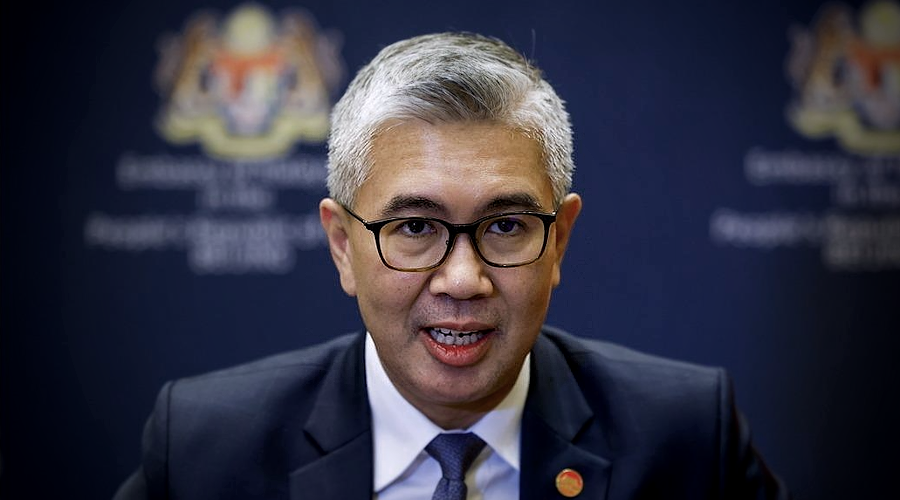
When I grew up, one of the most fascinating films on time travel was Back to the Future. I thought about this film as Malaysia finished hosting the Economic Ministers from ASEAN and its Dialogue Partners, for the 57th ASEAN Economic Ministers’ Meeting and Related Meetings. Imagine this: the year is 2045. Many youths are gainfully employed in high-tech industries or high-value services within ASEAN—a globally respected economic powerhouse that became the world’s fourth largest economy by 2030. The region is agile, inclusive, and digitally integrated. Every employable youth is benefiting from ASEAN’s well-established, seamless and secure digital economy. Almost everyone—from elderlies to toddlers—is living and breathing “digital.” Most public education and healthcare services are delivered on-demand, online or via apps. AI helps people live longer, healthier, more productive lives. Food security is a given, supported by AI-powered agrotech. As most of us embrace a healthy lifestyle, public healthcare funding has increasingly been channeled to improving education, as well as promoting entrepreneurship and creativity. Thanks to the critical mass of e-mobility, the region’s air could never be cleaner as all ASEAN member states achieved their Net Zero goal well ahead of their target timeline. Businesses of all sizes flourish, particularly the MSMEs—thanks to advances in ASEAN’s digital economy ecosystem. The region successfully unlocked US$2 trillion of digital economic value by 2030, empowering roughly 70 million MSMEs through the creation of a modern, comprehensive, and interoperable regional digital economy framework. As a result, trade among ASEAN countries has increased to a respectable 80 percent, a reflection of improved prosperity among its member states. E-commerce, fintech, and AI-driven services flow across ASEAN with minimal friction, supported by interoperable payment systems and robust data governance. Youth-led startups and creative industries prosper, powered by regional innovation hubs and digital talent mobility. Green manufacturing, circular economy and renewable energy see industries—including the aviation industry—releasing only hydrogen and water into the air. Energy security is delivered by hydro, wind, solar and small, modular reactors—accessible via a smart, regional AI-empowered ASEAN Power Grid. Back in 2025, it was recorded in history that this evolution was shaped by Malaysia’s 18 Priority Economic Deliverables (PEDs), which laid the groundwork for a future-ready ASEAN Economic Community (AEC). Indeed, when Malaysia assumed the Chairmanship of ASEAN’s Economic Pillar this year, I felt the weight of responsibility on our shoulders. Chairing the 57th ASEAN Economic Ministers’ (AEM) Meeting in Kuala Lumpur this past week brought that responsibility into sharp focus. In a world fractured by geopolitical rivalry, fragile supply chains and global economic headwinds, Malaysia has been entrusted to guide ASEAN towards stability, resilience and growth. This is both an honor and a heavy responsibility. Why ASEAN matters to Malaysians, and Malaysian youths For many, ASEAN meetings may feel unrelatable. Having been fully involved in the ASEAN Ministerial decision-making process since December 2022, I can confidently share that the decisions made at AEM do directly shape our economy, our jobs, and our opportunities. ASEAN’s principle of Centrality means that, expectedly, certain things […]
2月前
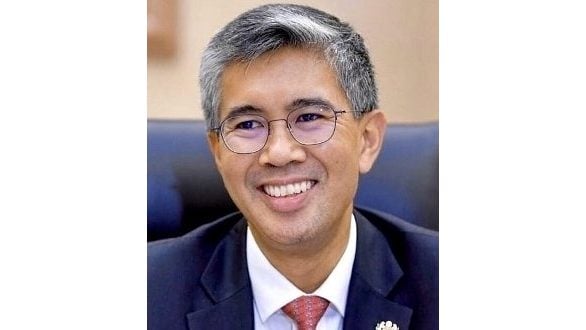
A month ago, Tengku Zafrul Aziz was warmly welcomed by the sports fraternity into their fold. On May 10, the corporate man turned rising political star was appointed the new president of the Badminton Association of Malaysia (BAM) for the 2025-2029 term. As a badminton fan, I also welcome Zafrul to play a more prominent role in Malaysian badminton. Why not, if a person of his stature is prepared to spend his time and resources to help develop our national sport! This past week, Zafrul has been hogging the limelight for a different reason, politics to be more precise. Not surprisingly, his decision to leave Umno for PKR is much more controversial than his appointment as the head of a sports association. Unlike the BAM appointment, not everyone is happy with his latest political move. His detractors have called him names, including the demeaning “political tourist” while his supporters said he would give “added value” to PKR, given his background and experience. As for me, being a keen political observer, I don’t think it would do the nation any good if certain politicians are placed on a high pedestal of indispensability or invincibility. At the moment, I don’t think there is any exceptional or extraordinary Malaysian politician deserving of the “statesman” status. None. Not any of our former prime ministers or the current one. There are no statesmen in Malaysia, as far as I’m concerned, only career politicians. Take that in with a pinch of salt, if you must. When someone is described as a political rising star, it is either because he is ‘blessed’ with strong cables and ascended the political ladder unusually quick, or he is regularly mired in controversy, positive or negative, good or bad. Zafrul is in that awkward situation today. His announcement that he has left Umno to join Prime Minister Anwar Ibrahim’s PKR has ignited significant controversy within the nation’s political landscape. This development has stirred tensions within the unity government coalition, highlighting underlying issues of party loyalty, internal dynamics and strategic maneuvering. Already, several Umno leaders have called for his resignation from the cabinet. They have also reminded the prime minister that Zafrul’s post as the minister of investment, trade and industry is an Umno quota and that it must be returned to the party. The many salvos from Umno against Zafrul were not unexpected given the minister’s strained relations within Umno. Zafrul’s relationship with Umno has been fraught with challenges. Following Umno’s poor performance in the 2023 Selangor state elections, where the party secured only two out of 12 contested seats, Zafrul resigned as the state chapter’s treasurer in April 2024, citing dissatisfaction with the party’s revival efforts. Sources suggest that internal power struggles and fears of being overshadowed led certain Umno leaders to sideline him, exacerbating tensions and prompting him to explore opportunities elsewhere. Umno has been very vocal about party-hopping of late, probably because the party is in a vulnerable state. No surprise that it has expressed strong objections to […]
6月前
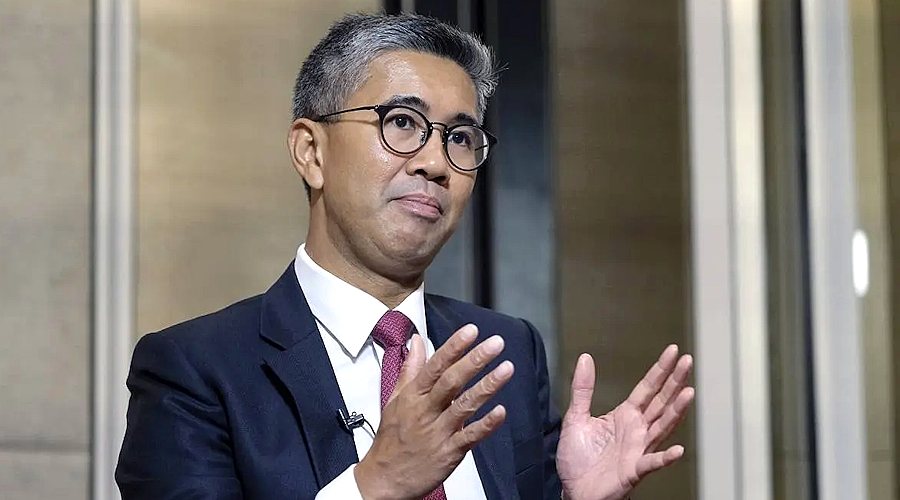
更多Tengku Zafrul Tengku Abdul Aziz







 登入
登入
 Newsletter
 联络我们
联络我们
 登广告
登广告
 关于我们
关于我们