26 October 2025 marks a historic moment. In Kuala Lumpur, Timor-Leste is officially joining ASEAN as its 11th member state. For most Malaysians, the name Timor-Leste may feel distant; a small country on the periphery of Indonesia, known mainly through fragments of history and humanitarian headlines. Yet its accession is not just another expansion of ASEAN. It is the return of a long-ignored story to Southeast Asia’s collective consciousness, one that reminds us of what regional solidarity once meant, and what it could still mean. From resistance to nationhood Timor-Leste’s history is written in endurance. Colonized by Portugal for more than four centuries, it declared independence in 1975, only to be invaded by Indonesia nine days later. For 24 years, the Timorese people lived under occupation, resisting through the mountains, through art, and through silence. Nearly a third of the population perished. Yet the resistance persisted, led by figures such as Xanana Gusmão and José Ramos-Horta, who carried their struggle from the jungles to the United Nations, from guerrilla warfare to diplomacy. In 1999, the UN supervised a referendum, and the Timorese voted overwhelmingly for independence. The cost was immense, including destroyed homes and lives uprooted. When peacekeepers entered Dili, the city was in ruins. But amid the ashes, the Timorese people rebuilt. In 2002, the world witnessed the birth of Southeast Asia’s youngest nation; fragile, poor, yet fiercely proud. Two decades later, the journey continues. Timor-Leste remains small with a population of 1.3 million and an economy still reliant on oil and gas, but it is also among the region’s most democratic societies. Power transitions peacefully, elections are competitive, and civil society is vibrant. In a region where democracy often retreats, this is no small achievement. Malaysia’s relationship with Timor-Leste, however, is not a new one. During the occupation years, Kuala Lumpur, like other ASEAN capitals, upheld the principle of non-interference, aligning with Jakarta’s stance that Timor-Leste was an “internal matter.” That silence reflected ASEAN’s cautious diplomacy, but it also left a moral wound. When the violence broke out in 1999, Malaysia became part of the UN-sanctioned peacekeeping force (INTERFET). Our troops were among the first to land in Dili to help restore order. It was a moment of quiet redemption, when Malaysia moved from silence to solidarity. Since then, diplomatic ties have deepened. Malaysian educators, engineers, and advisers have worked in Dili; Timorese students have studied in Kuala Lumpur. These small but meaningful connections have built a bridge that now finds new significance as Malaysia chairs ASEAN during Timor-Leste’s formal admission. When Malaysia stood up: The APCET story To understand why Timor-Leste’s membership matters, we must also remember an event that tested Malaysia’s conscience long before independence was achieved; the Asia Pacific Conference on East Timor (APCET) in 1996. At that time, Malaysia was not yet ready to talk openly about Timor-Leste. The Suharto government in Indonesia was still powerful, and the issue was seen as a threat to regional harmony. Yet a coalition of Malaysian NGOs and […]
1月前
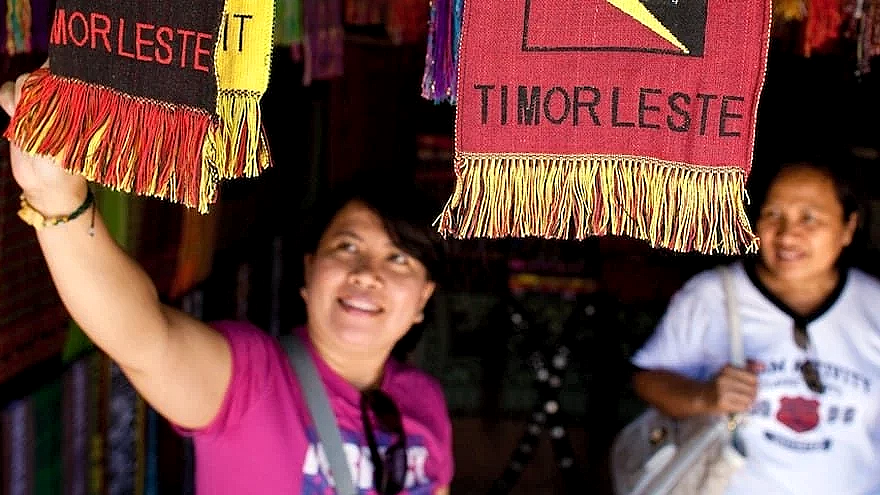
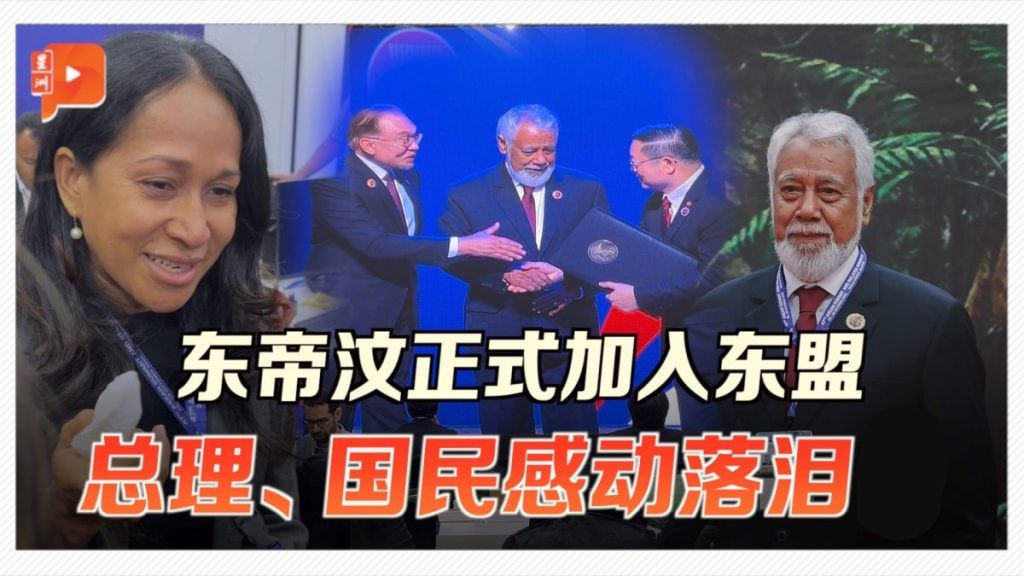
The issue of Timor-Leste joining ASEAN has become the highlight during ASEAN Summit and Foreign Ministers’ meeting this year. During a recent visit to Malaysia, Timor-Leste President and Nobel Peace Prize laureate José Ramos-Horta reaffirmed his confidence that the country will officially become an ASEAN member in October this year. He is also optimistic that Timor-Leste will achieve significant economic growth in the next two to three years. However, Horta also noted that intra-ASEAN trade is facing stagnation and even signs of decline. Fewer ASEAN companies venture abroad compared to China For years, Timor-Leste has only participated in ASEAN affairs as an observer. But due to its geographic location in Southeast Asia and its historical ties with Indonesia, Timor-Leste has long been deeply engaged in the region’s economic, political, and diplomatic matters. “Seventy percent of Timor-Leste’s goods come from Indonesia, while China is the second-largest trading partner. And trade volume with China is rapidly catching up with Indonesia.” In a media interview at Taylor’s University on June 19, Horta pointed out that Indonesia is currently Timor-Leste’s largest trading partner. In 2024, bilateral trade between the two countries reached US$390 million, marking a 12.31 percent year-on-year increase. According to the Ministry of Foreign Affairs of China, Timor-Leste’s bilateral trade with China in 2023 was about US$340 million. China maintained a large trade surplus, exporting goods such as mechanical and electrical components, cement, steel products, ceramics, textiles, and furniture. Why are the main trading partners of Timur-Leste not its neighboring ASEAN countries, but rather a distant one like China? Horta candidly said, “This is largely due to the lack of genuine entrepreneurial spirit among ASEAN countries. Few ASEAN businesses venture abroad to invest.” In contrast, he sees China as a global investor and trader, whereas ASEAN countries still have room for improvement in this area. “The private sectors in ASEAN have yet to develop the courage, vision, and entrepreneurial drive.” High dependency on ASEAN market That said, when viewed collectively, Timor-Leste’s trade does rely heavily on the ASEAN market. From 2004 to 2022, about 60.2 percent of its imports came from ASEAN countries, mainly Indonesia, Singapore, Vietnam, Malaysia, and Thailand. As for non-oil exports like coffee, they are mainly sold to non-ASEAN markets, with only small quantities exported to Indonesia and Malaysia. Intra-ASEAN trade stagnant Intra-ASEAN trade has been stagnant for nearly the past 20 years. Non-tariff barriers—such as export restrictions—are seen as a major obstacle. According to ASEAN secretariat data, from 2003 to 2023, total goods trade between ASEAN and its internal and external partners grew significantly. However, intra-ASEAN trade accounted for only about 22 percent to 25 percent of total trade—far lower than external trade. Now, with ASEAN nations signing the “2045 ASEAN: Our shared future” Kuala Lumpur Declaration, Horta hopes to witness a more integrated ASEAN economy over the next 20 years. Promoting regional free flow of resources “This includes enabling the free flow of capital, people, and knowledge among our 700 million population. “This will strengthen regional […]
5月前
更多Timor-Leste









 登入
登入
 Newsletter
 联络我们
联络我们
 登广告
登广告
 关于我们
关于我们